They Got Written Off, Then Wrote Themselves Back In: The Stars Who Hijacked Their Own Hollywood Endings
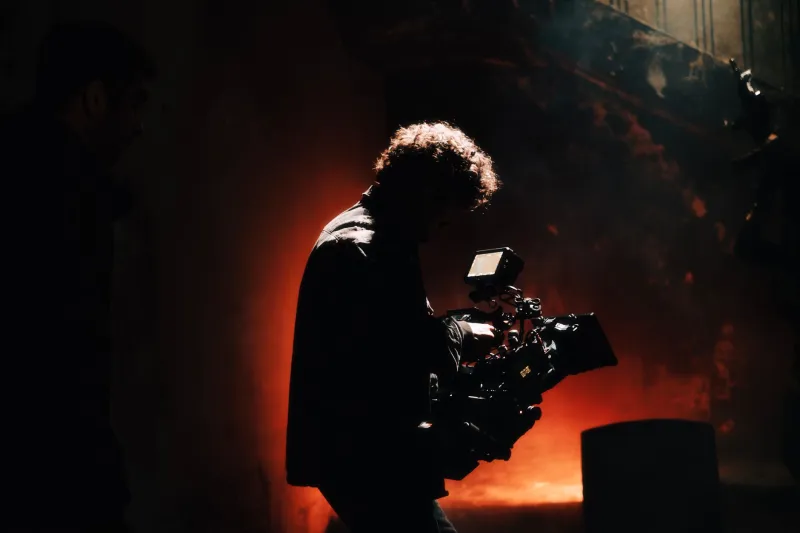
Hollywood has a very particular way of disposing of people. There's no dramatic firing, no tearful goodbye montage — just a slow fade. The calls stop. The auditions dry up. Your publicist suddenly becomes very busy. And before you know it, you're a trivia question at someone's dinner party.
But here's the thing about being underestimated: it's actually incredible fuel. A select group of celebrities, tired of waiting for permission to exist again, decided to completely sidestep the gatekeepers and direct themselves back into the conversation. No studio greenlight required. No casting director's blessing. Just raw ambition, a vision, and the audacity to say I'll do it myself.
The results? Chef's kiss. Hollywood looked absolutely foolish.
The Waiting Room Is a Trap
Let's be real — the traditional path back from career purgatory is humiliating. You do a reality show. You pop up in a cameo that's meant to feel nostalgic but mostly just feels sad. You give an interview where you talk about "taking time for yourself" when everyone knows you just weren't getting hired. It's a whole performance, and the audience sees right through it.
The stars who actually pulled off the impossible comeback? They stopped performing for Hollywood's approval and started creating on their own terms. The move to step behind the camera isn't just a creative decision — it's a power grab. And power grabs, when executed correctly, are extremely entertaining to watch.
From Punchline to Puppet Master
There's a particular flavor of celebrity who tends to end up in this situation: the one who was maybe too famous too fast, or too difficult to categorize, or simply had the misfortune of being popular during a cultural moment that didn't age well. Hollywood files them under "liability" and moves on.
What's wild is that these are often the most interesting people in the room. The unconventional ones. The ones who don't fit neatly into a box. And when you give an unconventional person nothing left to lose, they tend to do something genuinely surprising.
Taking creative control — writing, producing, and directing projects they also star in — strips away every excuse the industry had to keep them sidelined. You can't say someone is "hard to cast" when they've already cast themselves. You can't question their bankability when they've already built an audience from scratch. The whole game changes.
The Kabooo! Moment: When the Industry Has to Eat Crow
There's a specific moment in every one of these comeback stories that deserves its own sound effect — the moment when the industry realizes it massively miscalculated. A film premieres at Sundance and the reviews are glowing. A self-produced project racks up streaming numbers that a major studio would kill for. A passion piece that nobody thought would connect suddenly connects, and all the executives who passed on returning that person's calls are now very, very quiet.
That's the Kabooo! moment. The implosion of everyone's assumptions. The plot twist that rewrites the entire story.
And the beautiful thing is — it's almost always louder when it comes from someone people had already dismissed. The contrast is just chef's kiss.
Why Directing Is the Ultimate Power Move
Acting, as a career, requires constant external validation. Someone has to believe in you enough to hand you a role. Directing — especially when you're directing yourself — removes that dependency entirely. You become the decision-maker. You control the narrative, literally and figuratively.
For celebrities who'd spent years being told who they were, what they could play, and what audiences would accept from them, stepping into the director's chair is almost a philosophical act of rebellion. It's saying: you don't get to define me anymore.
And audiences, who are frankly exhausted by manufactured comeback narratives, respond to that authenticity like crazy. People can smell a genuine creative vision from a mile away. When someone is clearly making something because they needed to make it, not because a focus group approved it, that energy is magnetic.
The Gatekeepers Hate This One Weird Trick
Here's what makes these stories so delicious from a pop culture standpoint: the industry's gatekeeping mechanisms are specifically designed to prevent this kind of thing from happening. The whole system is built on controlling access — to funding, to distribution, to audiences. When someone bypasses all of that and still wins, it doesn't just embarrass the individuals who wrote them off. It calls the entire system into question.
And Hollywood, being Hollywood, responds to this threat the only way it knows how: by pretending it was always rooting for the person. Suddenly the same executives who couldn't return emails are showing up to premieres. The same publications that ran "whatever happened to..." pieces are now running glowing profiles. It's deeply, magnificently hypocritical, and we love to see it.
The Audience Was Always There
One of the most consistent themes in these comeback stories is that the audience never actually left. The fans were there, quietly waiting, occasionally posting throwback content and wondering why this person wasn't working more. Hollywood convinced itself the public had moved on. The public had not moved on.
This is, perhaps, the most important lesson in all of these stories. The industry confuses its own disinterest with the audience's disinterest. Those are two very different things. And when a sidelined star finally creates something new and drops it directly in front of those waiting fans, the response tends to be... a lot.
Like, a lot a lot.
The Ripple Effect
Beyond the individual victories, these stories matter because they inspire other people in similar situations to stop waiting. Every time someone successfully directs their own comeback, it sends a signal to every other talented person sitting in Hollywood's waiting room: you don't have to stay here.
The tools are more accessible than ever. Audiences are more fragmented and hungry for fresh voices than ever. The old model — where a handful of studios decided who got to be famous and for how long — is genuinely crumbling. And the people who figured that out early enough to act on it are now the ones looking like geniuses.
Hollywood didn't write the ending to their stories. They did.
The Moral of the Story (Yes, There Is One)
If there's a throughline in every single one of these glorious, messy, satisfying comeback narratives, it's this: the entertainment industry is not actually in charge of your relevance. It thinks it is. It acts like it is. But it isn't.
The stars who figured that out — who stopped auditioning for their own lives and started directing them instead — didn't just save their careers. They made genuinely great art in the process. Art that exists because they had something to prove and no one to answer to.
And that, more than any studio greenlight or awards campaign, is the kind of story that actually deserves a sequel.