Nice Try, Bestie: How Fans Are Absolutely Destroying Celebrities Who Fake 'Organic' Viral Moments
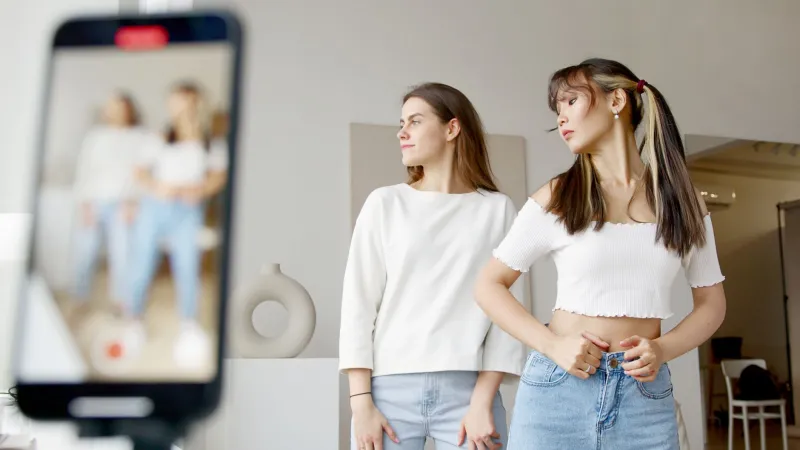
Somewhere in a sleek Los Angeles creative studio, a team of very expensive social media consultants is huddled around a mood board covered in words like authentic, raw, and just like us. They're crafting what they'll later describe to their client as a "totally spontaneous" moment. The celebrity will film it on a slightly-too-good phone camera. The lighting will be almost bad. There will be a relatable stumble, a self-deprecating laugh, maybe a reference to a trending sound.
And then the internet will take one collective sniff, wrinkle its nose, and say: Yeah, no.
Welcome to the golden age of the fake viral moment — and its even more entertaining cousin, the instant public evisceration.
The BS Detector Has Logged On
Here's the thing nobody in a celebrity's inner circle seems to want to accept: the average person who spends four hours a day on TikTok has become an expert at reading the room. Audiences have watched enough genuine viral moments to know what actual spontaneity looks like — the weird framing, the background chaos, the slightly unflattering angle nobody would choose on purpose. They've also watched enough brand deals and PR stunts to recognize the uncanny valley version of all of that.
When a celebrity's "random" kitchen video has three-point lighting and a ring light reflection visible in the microwave door, people notice. When the "surprise" gift unboxing involves a product that just so happens to be launching next Tuesday, people notice. When the "emotional breakdown" conveniently drops 48 hours before an album release, people really notice.
The internet doesn't just notice quietly, either. It notices loudly, in comment sections, in stitched TikToks, in Reddit deep-dives that would make an investigative journalist genuinely nervous.
The Anatomy of a Fake Moment
Let's break down the classic celebrity fake-viral playbook, because at this point it's basically a genre.
The Manufactured Candid: This is the "caught off guard" photo or video that required approximately seventeen takes and a professional photographer crouching behind a hedge. Giveaways include: suspiciously perfect hair mid-laugh, a background that's been quietly decluttered, and a caption that says something like lol my friend just snapped this when your friend is clearly on a Canon R5.
The Relatable Struggle Performance: Celebrity films themselves being "bad" at something normal — cooking, assembling IKEA furniture, parallel parking — except the incompetence is too cute, too timed, too safe to be real. Actual human failure is ugly and frustrating. This version has a punchline every twelve seconds.
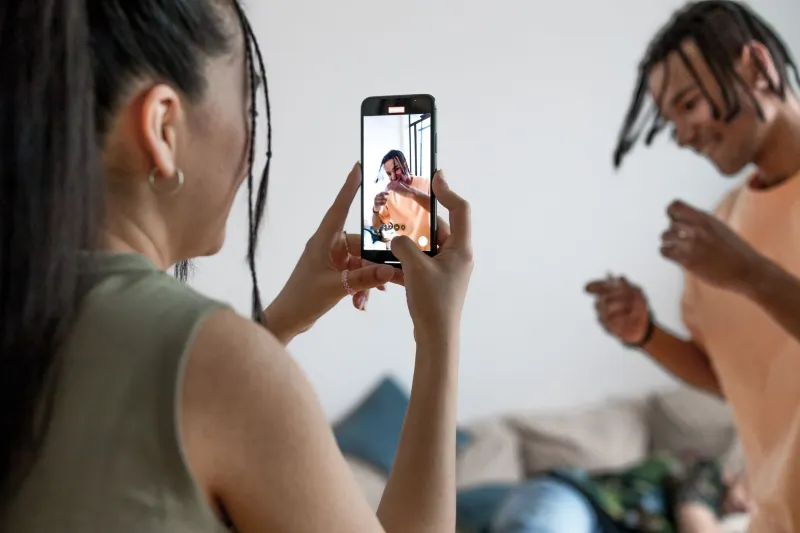
The Fake Unboxing Reaction: A product arrives. The celebrity acts genuinely shocked to receive it. They read the card aloud as if they haven't already signed a contract about this exact product. Their eyes go wide. They say "oh my GOD" in a frequency that suggests they've never received mail before. Meanwhile, the product is centered perfectly in frame from the very first second.
The Planted Paparazzi "Private" Moment: Technically not a social media post, but spiritually the same crime. The celebrity is "caught" doing something endearing — buying their own groceries, playing with a dog, reading a book that just happens to have its cover facing outward — by photographers who were definitely not tipped off.
Fans Are Not Accepting This
What makes this era genuinely fascinating — and deeply entertaining for the rest of us — is how fast the audience response has gotten. We're talking minutes. Sometimes seconds.
A celebrity posts their "unfiltered morning routine" and before they've even finished their sponsored matcha, there's a stitched response pointing out the fresh blowout, the ring light shadow, and the fact that the "unfiltered" caption has seventeen hashtags. Fan accounts are cross-referencing timestamps. Someone has already made a side-by-side comparison with their actual unfiltered morning routine, which involves a crumpled t-shirt and a vague sense of dread.
This isn't just casual side-eye anymore. Fans are building entire content ecosystems around calling out inauthenticity. "Delusional celebrity" TikTok is practically its own subgenre at this point, with creators racking up millions of views doing nothing but slow-zooming into the inconsistencies in a "candid" post while a dramatic sound plays.
And the really brutal part? The more desperately a celebrity tries to seem relatable, the more the audience leans back and crosses their arms. Trying too hard to be real is, paradoxically, the least real thing you can do.
The Relatability Industrial Complex
Somewhere along the way, celebrity PR shifted from managing image to manufacturing personality, and the seams are showing everywhere. The pressure to be "down to earth" has created this bizarre performance of normalcy that requires enormous resources to pull off — which is, of course, the exact opposite of normal.
It's a multi-million dollar operation designed to make someone look like they don't have a multi-million dollar operation. And every once in a while, the curtain slips. The ring light flickers. The PR-approved "candid" caption doesn't quite match the vibe. The "genuine" emotional moment is timed a little too well to the press cycle.
And there's the audience, popcorn in hand, already typing.
So What Actually Works?
Here's the delicious irony: the celebrities who come across as most authentic are usually the ones who've given up on the performance entirely. The ones who post something slightly embarrassing without softening it. Who respond to criticism with something other than a lawyer-approved statement. Who occasionally just... disappear from the internet for a while without a countdown timer and a brand deal waiting on the other side.
Authenticity, it turns out, cannot be workshopped into existence by a social media team, no matter how many mood boards they make. Audiences have been watching human beings be human beings their entire lives. They know what it looks like. And they definitely know what it doesn't look like.
The celebrities who keep trying to fake it are essentially showing up to a poker game against people who've memorized every tell. The audience isn't just watching the video anymore. They're watching the video behind the video — the choices, the angles, the timing, the suspiciously convenient product placement.
And every time a new manufactured moment drops, the comment section is already warming up.
Nice try, bestie. Really. Nice try.